Monday, 21 February 2022

Cochlear implant vs hearing aids


Cochlear implant vs hearing aids

    ● Cochlear implant

A cochlear implant is a gadget that stimulates the central auditory nervous system to sense sounds. It skips damaged portions of the inner ear and can help people who are deaf or have hearing loss.

Cochlear implants are connected to the auditory nerve using a surgically implanted electrode array. A microphone picks up sound, and software within the implant converts it into electrical impulses that travel along nerve fibers to stimulate the auditory nerve. These electrical impulses are then sent to an electrode that stimulates the auditory nerve. This stimulation occasionally leads to certain sounds recorded as vibrations by the electrode, even in people with no hearing damage.

● Hearing aid

Hearing aids have traditionally been used for treating age-related hearing loss but can also be used by those who have some kind of damage to their ears. Specifically, hearing aids may include amplifiers and other sound processing technologies that help translate every sound into an audible format for people with mild, moderate, or severe hearing impairment.

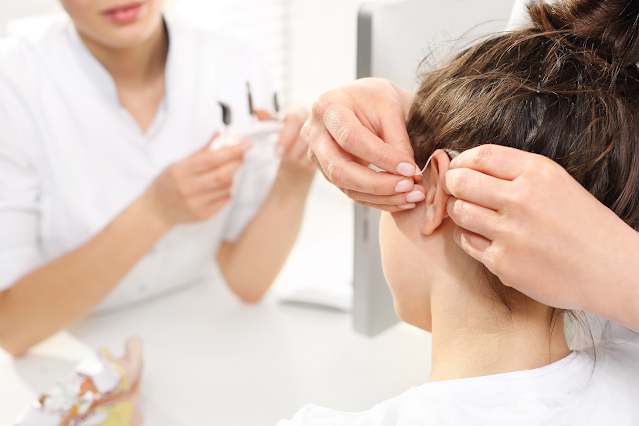
Hearing aids are gadgets that amplify sound and assist people with mild to severe hearing loss in "understanding" the conversation when they are present in the vicinity of their natural ear. They do not cure hearing loss or replace damaged portions of the inner ear but can improve sound discrimination and quality for mild to moderate hearing damage.


The significant difference between a cochlear implant and a hearing aid hears aids are designed to effectively only amplify sound; this makes them especially beneficial to those with trouble hearing in certain situations or environments. The cochlear implant simulates sounds instead of just amplifying them.


Attune Hearing clinics provide medical hearing services, including hearing tests. If you need hearing aids or cochlear implants, get in touch with Attune to book an appointment or for more details.

Thursday, 17 February 2022

What can cause hearing loss?

What can cause hearing loss


Many factors can cause hearing loss, each having a different treatment. It is important to know why you are experiencing hearing loss to receive the best possible care and advice.


Cause of hearing loss

1.Age

As people grow older, their hearing deteriorates. Hearing loss is one of the unfortunate side effects of old age. Sometimes, the causes of hearing loss may be detectable right away. For example, if you are suddenly entirely deaf in your left ear, you might assume that you have suffered sudden hearing loss.


Many individuals become aware they suffer from hearing loss when it is too late to do anything about it. Sometimes, there may be no apparent cause or explanation for why a person begins hearing things differently. Many people who suffer from hearing impairments claim that the change just comes on gradually, and they don't notice how much their auditory abilities have diminished until it's too late.


2.Infection

Fungal infections can cause acute hearing loss and ear problems. Deep cavities in the middle ear (eustachian tube) are commonly caused by bacterial infections, eustachian tube dysfunction, or viral infections that affect the middle ear. Individuals with chronic candidiasis, such as yeast throat infections, have a very high risk of developing chronic otitis media and cavity formation in the middle ear. Fungal infections can also affect the brain and cause meningitis or brain abscesses.


Other causes of hearing loss include;

● Nerve damage due to trauma, flu and other viruses
● Prolonged exposure to loud noise
● Genetic background
● Medical conditions
● Inner ear issues and diseases, such as tinnitus and otosclerosis

Attune Hearing clinics provide medical hearing services, including hearing tests. If you think you have hearing loss, contact Attune to book an appointment or visit their website for more details. They also offer custom earplugs that will help protect your ears.

Sunday, 23 January 2022

Can Age-Related Hearing Loss be Prevented?


Can Age-Related Hearing Loss be Prevented?

What is age-related hearing loss?

Age-related hearing loss is loss of hearing that occurs gradually to most of us as we grow older. This type of hearing loss commonly affects older and elderly adults. Age-related hearing loss can make hearing doorbells, phone ringing, and smoke alarms challenging.

Due to difficulty and straining to understand conversations, one can opt to stay in isolation that leads to feeling lonely and depressed.


What causes age-related hearing loss?

The most common cause is the changes that arise in the inner ear as we age. It can also result from middle ear changes or complex changes along the nerve pathways from the ear to the brain.

Some medications and medical conditions can play a significant role too.


Can age-related hearing loss be prevented?

The best and most effective way to prevent age-related hearing loss is to protect your hearing.


1. Avoid loud noises

Keep away from blaring noises and minimize noise exposure. Noise is loud enough to damage your hearing if it hurts your ears, you cannot hear what the individual next to you is saying, or you have ringing in your ears or muffled hearing afterward.

     2. Keep the volume of earbuds and headsets at a safe level

If the person near you can hear the music you are listening to, your volume is too loud. Music volume on your earbud should be less than 60% of the maximum volume. Some gadgets have settings that help limit your volume. Use earphones or earbuds for a maximum of one hour, then take a break for five minutes before using them again.

3. Quit smoking


4. Get prompt care for health issues, including ear infections


5. Wear earplugs or special fluid-filled ear muffs


6. Get your hearing tested

Get a test if you are exposed to conditions that might cause hearing loss. The earlier a problem is detected, the earlier something is done. Also, consider getting regular checkups.


If you think you may be developing hearing loss, book an appointment to get your hearing tested. At Attune, we offer comprehensive hearing tests to diagnose your hearing loss. Visit our website or contact us for more information. 

What Does an Audiologist Do?

What Does an Audiologist Do?


An audiologist is a health care professional who identifies, evaluates, and manages hearing disorders, balance, and other hearing-related issues.

The general duties of an audiologist include:

● Examining patients with hearing or balance-related problems

● choose, adjust and distribute hearing aids and other listening gadgets

● offer and fit protective devices that will help protect one's hearing

● they educate patients on the impact of noise

● assist in research on prevention, identification, and management of hearing loss and other hearing-related issues, including balance


When to see an audiologist?

Several signs indicate it is time to visit an audiologist. The signs are related to hearing loss and could indicate that you are experiencing hearing loss problems. The signs include:

1. You are experiencing ringing in the ears with no external sound present. The sounds come from inside the body, and no one else around you seems to be hearing them.

2. Turning the volume of the radio, television or other electronics higher than necessary.

3. You have difficulty understanding speech when there is background noise, and you tend to tell people to repeat themselves frequently.

4. You cannot hear soft sounds, and it is becoming more and more difficult to listen to women and children speak than men.

5. You avoid social gatherings and public speaking due to hearing

6. You have a lot of earwax

7. You are experiencing sudden hearing loss

8. You are due for a checkup.

Conditions that an audiologist can help you with include:

● Hearing disability

● Amplification

● Auditory processing disorders

● Tinnitus

● Hyperacusis and Misophonia

● Balance disorders

Going to the doctor's office is scary sometimes, especially if you are experiencing signs related to hearing loss. However, you must see an audiologist to ensure that your signs are not associated with hearing loss; if they are, the specialist will advise you on what to do.

If you think it’s time you saw an audiologist, book a hearing test at Attune. Our qualified audiologists perform comprehensive hearing tests. Visit our website to book an appointment.

Thursday, 9 December 2021

Can Hearing Loss Affect Other Aspects of my Health?

Can Hearing Loss Affect Other Aspects of my Health?


Hearing loss can affect other aspects of your health if left untreated. To prevent hearing loss affecting your health, it’s essential to seek medical attention immediately after you realise that you are experiencing hearing loss.


Ways Untreated Hearing Loss Affects Other Aspects of Your Health

1. Falls

Ears play a significant role in our balance. Suppose your inner ear is affected by an infection that causes your hearing loss, the condition will also affect the part of the inner ear that is responsible for balance. This will increase the chance of you falling due to a lack of balance. Unfortunately, you cannot predict when, how or where the fall will happen. Some falls are so severe that they lead to broken bones. Therefore, if you are experiencing hearing loss, visit an audiologist.


2. Depression

After a while, hearing loss begins to take a toll on your mental health. People with hearing loss may experience poorer quality of life, isolation and reduced social activities. Also, there is a stigma associated with hearing loss. This would lead to depression too. Therefore, if you or someone you know is experiencing hearing loss, ensure you seek support. You can search for hearing loss support groups in your area or online.


3. Dementia

There is a relationship between dementia and hearing loss. Individuals who experience mild hearing loss are nearly twice as likely to have dementia than those with normal hearing. The danger rises three-fold for those with moderate hearing loss and five-fold for those with severe impairment. Hearing loss accelerates brain function decline.


4. Heart health

Hearing loss is linked to heart health. Some studies say that the inner ear is so sensitive to blood flow that deformities in the heart system could be noted here earlier than in other less sensitive parts of the body.


When someone is diagnosed with hearing loss, the majority of the time, hearing aids are recommended. Hearing aids will help improve the quality of life and prevent other health issues. Therefore, if you think you have hearing loss, it’s best to get your hearing tested. At Attune, we offer comprehensive hearing tests. You can visit our website or contact us to book an appointment. 

Sunday, 7 November 2021

How to Reduce the Risk of Hearing Loss in Children | Attune hearing

How to Reduce the Risk of Hearing Loss in Children |Attune hearing


Hearing loss can be sudden or occur slowly, and children's hearing loss can be caused by loud noises and ear infections, among other things.


How do You Reduce the Risk of Hearing Loss in Children?

      1. Keep them away from loud noises

Noise-induced hearing is permanent, but it can be prevented. It is caused by prolonged exposure to loud noise such as music concerts, lawnmowers, and fireworks. To prevent this, ensure that you keep your children away from the noisy environment or ensure they wear earmuffs when in noisy environments.


2. Quiet home

Create a quiet home. For instance, ensure that the TV volume and video games are appropriate but can still be heard clearly. You don't want your kid to strain. Buy quiet toys or toys whose volume can be regulated. If you live in a noisy area, ensure the doors and windows are closed to keep the excess noise out. Have furnishings that absorbs noise, such as carpets.


3. Protective equipment

Encourage your children to use earplugs and earmuffs if they are potentially exposed to loud noise. This can be when they are going to a music concert or watching fireworks. If they are in a band, buy them earplugs.


4. Headphones and music

Ensure your child's headphone volume is at the minimal volume. Teach your child about the cons of having loud music directly in their ear and encourage them to turn down the music. If you can hear their music when they have headphones on, it is too loud.


If you think your child is suffering from hearing loss, visit an Attune clinic near you for them to undergo a hearing test. We also offer custom earplugs that can help them protect their hearing. Visit our website for more information or book an appointment for a hearing test. 

Monday, 4 October 2021

 What Are the Pros and Cons of Earplugs, and Will They Prevent Hearing Loss?

What Are the Pros and Cons of Earplugs, and Will They Prevent Hearing Loss?


Pros of Earplugs 

1.Greater protection

Earplugs have a significant advantage compared to other protective ear equipment. Earplugs fit directly into the ear canal. It means they are suitable for people working in a boisterous environment as they provide the highest level of protection.

2.Earplugs are easy to carry

Due to their size and weight, they are easy to carry. The earplugs are small and light; hence they fit in your pocket, unlike big earmuffs.

Earplugs also make it easy for one to wear other protective equipment such as helmets and safety glasses.


Cons of Earplugs 


1.Difficult to fit

Earplugs rely on adequately fitting in the ear canal. Sometimes, it is not guaranteed that they will fit. They tend to have a problem when it comes to fitting. However, workers and anyone who uses earplugs should be trained to fit them properly to overcome these challenges. 


2.Infections

If you have an ear infection, it is impossible to use earplugs. Because they are uncomfortable and might touch the infection or wound, bringing more pain.

Share earplugs

Sharing earplugs is not recommended. Unlike earmuffs that cover the ear on the outside, earplugs are fitted in the ear. 


3.Will Earplugs Prevent Hearing Loss?

Yes, earplugs will prevent hearing loss. They are worn to protect your hearing when working in noisy conditions. When your ears are exhibited to too much noise, you risk experiencing hearing damage. When the noise damages your nerve ending in the inner ear, your hearing can not be fixed.

Earplugs will block out the noise, protecting your ears. 


If you work in a noisy environment or simply want to protect your hearing, visit us at Attune as we provide custom earplugs. Visit our website to book an appointment.